Last week I visited Fountains Abbey with Paul Pomfret from Culzean to help inform the re-interpretation project. Fountains Abbey is one of NTS’s most visited sites and like Culzean has diverse site elements. Paul had heard that they had based their visitor centre on Culzean’s so we were interested to see how a visitor attraction with a similar building, but without the historic building restrictions of Culzean functions. We met with Customer Development Manager, Kath Knight and Education Manager Tessa Goldsmith.
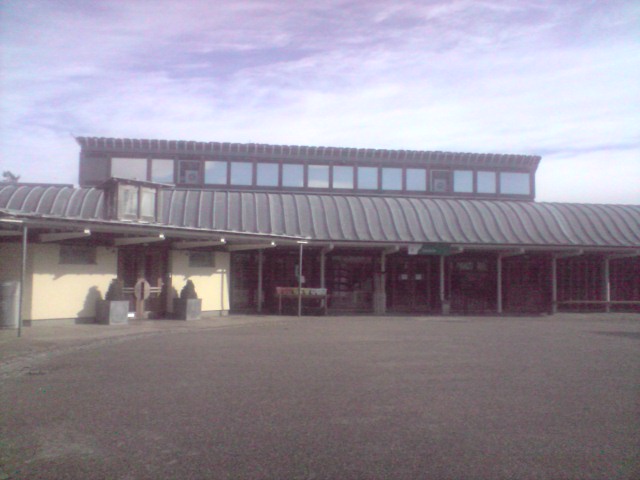
Fountains’s visitor centre was a new build back in 1992 by Edward Cullinan Architects. http://www.ecarch.co.uk/projects/fab.html. It echoes Culzean’s Home Farm quadrangle almost exactly in terms of layout and use, although clearly far more modern in appearance. Purpose built at the time to reflect the needs of the visitor attraction, staff are now reviewing the visitor journey and it is clear that the centre doesn’t function as originally intended.Over time, the interpretive areas here have been reclaimed by other functions like retail, as at Culzean. Similarly there are staff offices here which may become visitor facing areas, there is also a lecture theatre/AV area that is rarely used. Kath explained that there are various plans to build another new building where visitors can recieve an interpretive experience and introduction to the site, as part of wider plans to completely review the whole visitor journey.
It did seem that we shared a lot of the same problems but of course there were some areas where Culzean could perhaps learn from Fountains. For instance the property relies heavily on volunteers, to deliver learning events, and retail work as well as guided tours and conservation work. However they have a volunteer manager post who co-ordinates this, as opposed to it being part of someone’s role. And while they are trying to get Abbey visitors out and about around the estate and other buildings and appreciate its more than just an Abbey, we have the inverse problem that we want more of them to go in the castle. Unlike Culzean, arriving at the car park and visitor centre area seemed very clear and straightforward, but it turns out, they too have issues with multiple car parks and entrances and are also looking to rationalise this.
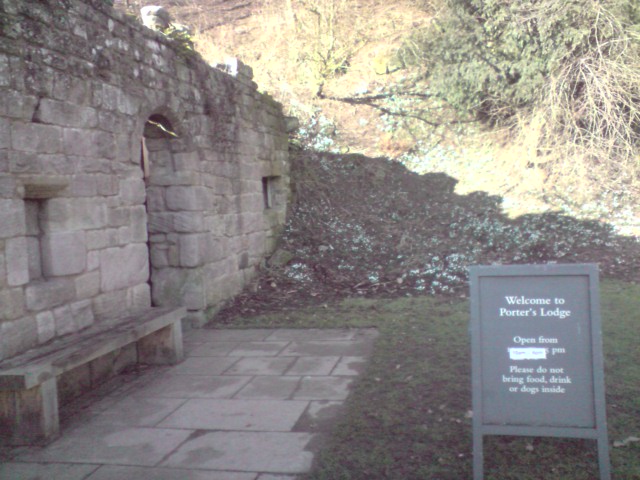
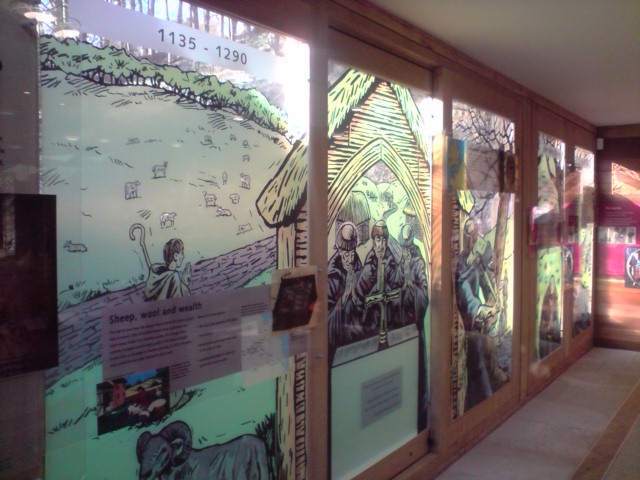
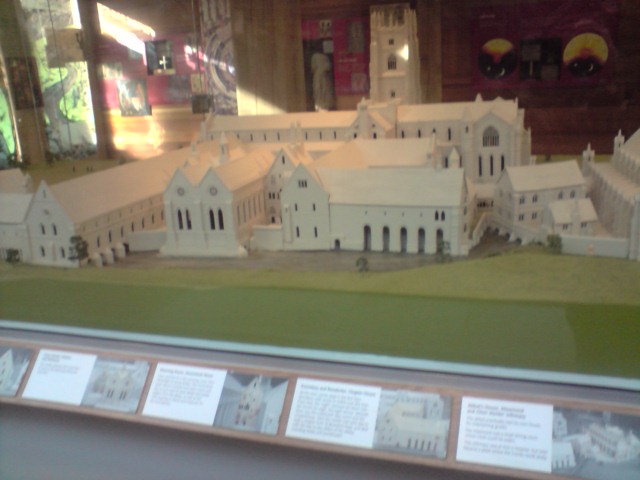
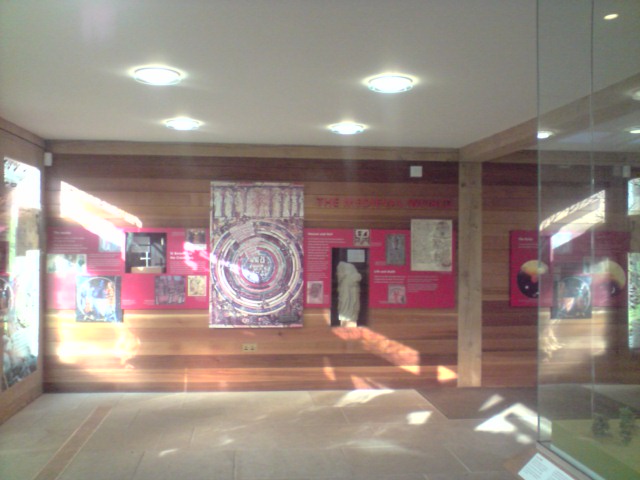
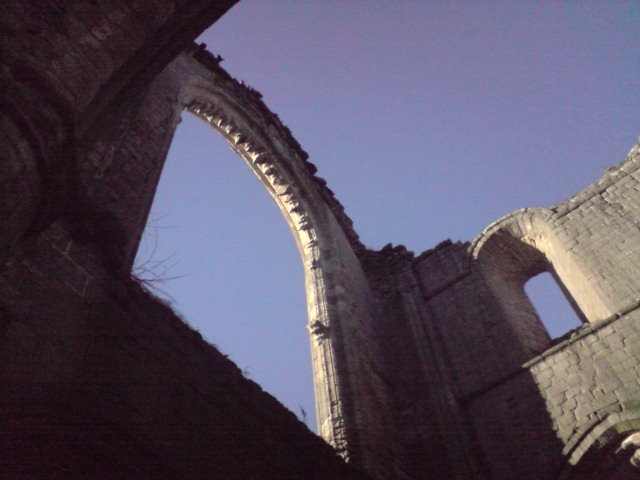
The most interesting part of our visit was learning how our NT equivalents had approached the challenge of creating a new interpretive space for the abbey. Porter’s Lodge sits very close to the Abbey. It is a new build, but is cleverly concealed within the walls of a ruined building. Apparently getting a new adventure playground put in by the visitor centre (another massively successful project) was far more problematic. While they expected issues around disturbing historic landscape, it was quite straightforward. The new build was able to sit on top of an existing concrete slab, and was built within the walls so it doesn’t disturb the existing structure and is wonderfully subtle. If anything, its perhaps a little too concealed.